Grade names for matcha are not standardized across the industry. One supplier’s “premium” is another’s “culinary.” For food manufacturers, what actually matters is the underlying specification — particle size, color values, flavor profile, and how the matcha performs in your specific application. This guide cuts through the naming confusion.
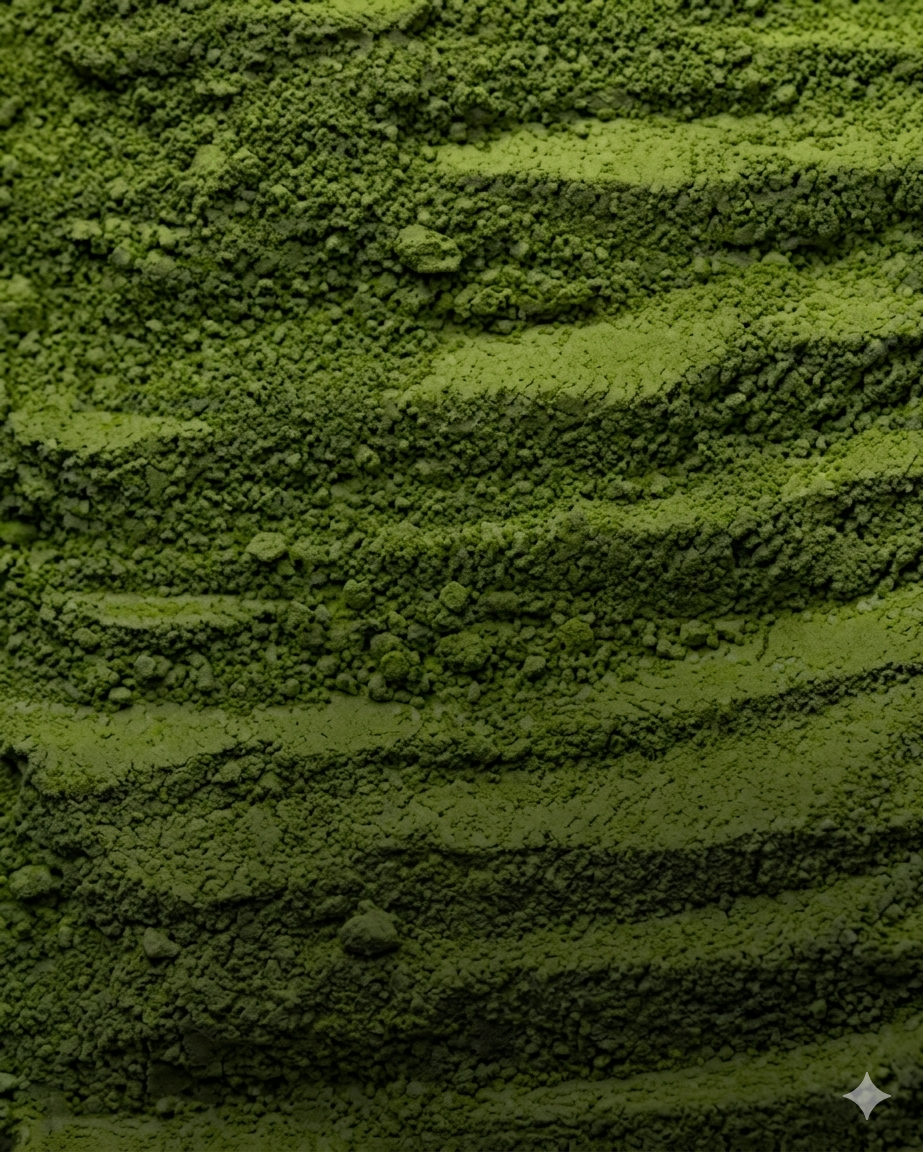
Why matcha grade names don’t tell the whole story
There is no industry body that certifies a matcha as “ceremonial grade.” The term was created as a marketing convention and means different things from different suppliers. A more reliable way to evaluate matcha for food manufacturing use is to look at the underlying attributes that grade names are meant to describe:
- Harvest timing — first flush (spring, early season) vs. later harvests
- Tencha source — shaded cultivation period, leaf selection
- Particle size — measured in microns, affects dispersion and mouthfeel
- Color specification — L*a*b* values confirm actual color vibrancy
- Flavor profile — umami intensity, bitterness level, sweetness
Request specification sheets alongside grade names, and you will have a much more reliable basis for supplier comparison than grade labels alone.
The three grade tiers and what they actually mean
Ceremonial grade
Ceremonial grade matcha uses the highest quality tencha — first harvest, carefully shaded, young leaves only. It is processed at the slowest milling speed to minimize heat exposure and preserve the most delicate flavor compounds. The result is a vivid green powder with a smooth, sweet flavor and minimal bitterness — traditionally whisked in hot water with no milk or sweetener.
For food manufacturing, ceremonial grade is rarely the right choice. At the concentrations used in RTD production (typically 0.3–0.8%), its delicate flavor advantage over premium grade is largely undetectable. Its significantly higher cost makes it impractical for production-scale use. Reserve ceremonial grade for premium single-serve formats where the matcha is the hero ingredient and its characteristics can actually be perceived.
Premium grade
Premium grade sits between ceremonial and culinary in harvest timing, color vibrancy, and flavor profile. It uses high-quality tencha with strong color and a smooth flavor that includes more umami than culinary grade without the bitterness of later harvests.
For most food manufacturing applications — matcha lattes, RTD beverages, matcha-flavored snacks, premium bakery — premium grade delivers the best cost-to-performance ratio. It provides consistent vivid green color, smooth flavor that complements other ingredients, and fine particle size that disperses well in cold and hot applications.
Culinary grade
Culinary grade uses tencha from later harvests with a stronger, more robust flavor profile and slightly less vivid green color compared to premium. It is specifically designed for applications where matcha is combined with other strong flavors or where it is used at higher concentrations — baked goods, ice cream, protein powders, dark chocolate, strongly flavored snacks.
Culinary grade is the most cost-efficient option for production at volume. For applications where the matcha flavor should be detectable but not dominant, or where other ingredients will influence the final color, culinary grade is often the right choice.
| Grade | Color vibrancy | Flavor | Best applications | Relative cost |
|---|---|---|---|---|
| Ceremonial | Vivid bright green | Sweet, umami, minimal bitterness | Premium single-serve, hero ingredient formats | High |
| Premium | Strong green | Smooth, balanced, good umami | RTD beverages, matcha lattes, premium snacks | Medium |
| Culinary | Good green, slightly deeper | Robust, slightly more bitter | Baked goods, ice cream, protein powder, confectionery | Lower |
Selecting grade for specific food manufacturing applications
RTD cold beverages
RTD matcha beverages require a grade that disperses in cold liquid without clumping, holds color through the production process, and maintains flavor at the relatively low concentrations used in ready-to-drink format. Premium grade is the standard choice. Request particle size data (D50 value in microns) alongside grade — finer particle size has a greater impact on cold dispersion than grade tier alone.
Test your selected grade at your actual production concentration in cold water, then in your finished formulation with other ingredients. Acidic pH environments (kombucha bases, citrus-flavored products) will degrade chlorophyll — account for this in your grade selection and concentration.
Matcha lattes and foodservice formats
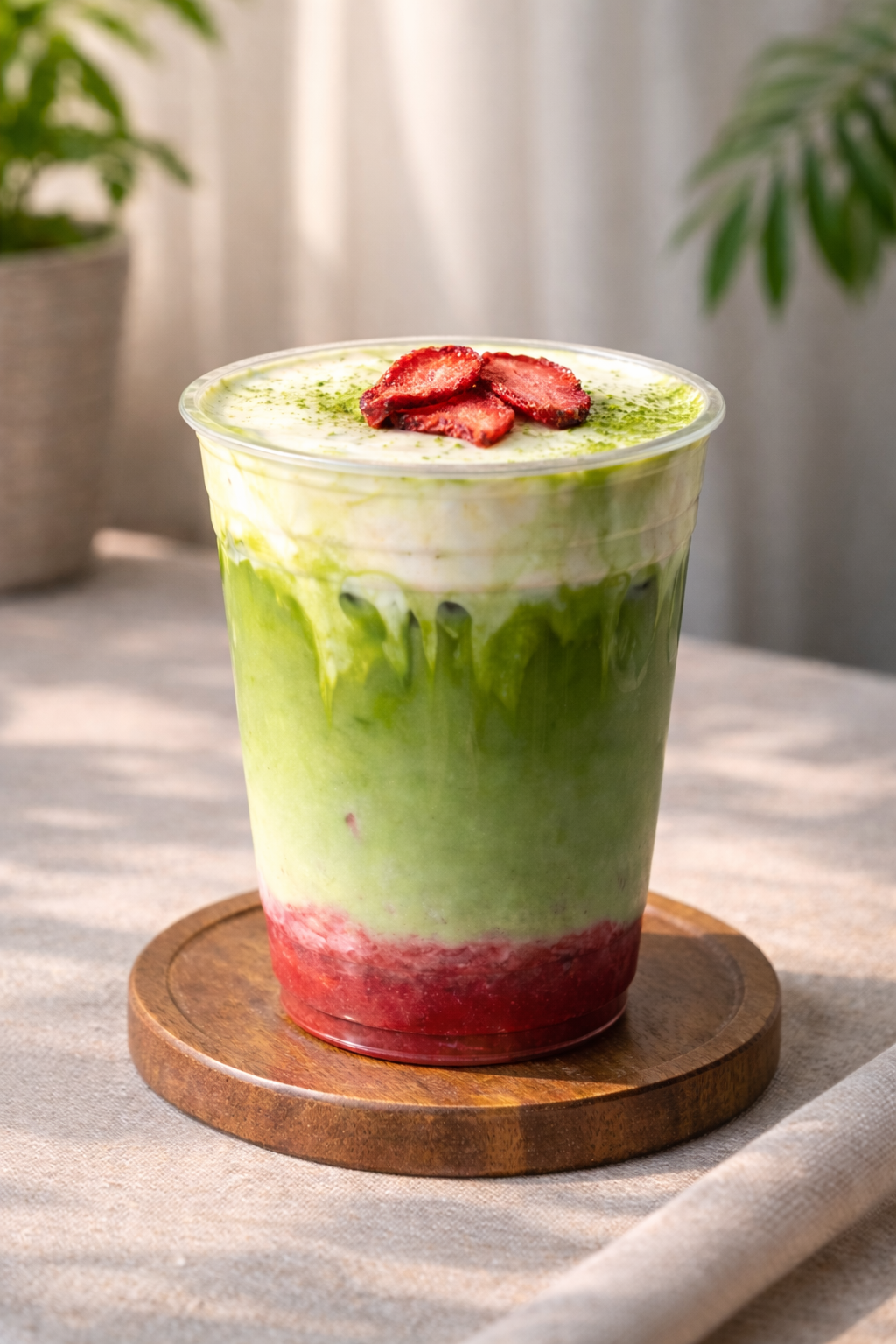
For café-facing or foodservice matcha products, premium grade typically delivers the best consumer experience. The color is vivid enough to photograph well and the flavor holds up in milk without bitterness at standard latte concentrations (4–6g per serve). Culinary grade can be used in sweetened or flavored latte formats where the matcha flavor is one of several components.
Baked goods and confectionery
Heat processing during baking (typically 160–200°C) will degrade chlorophyll regardless of grade. For baked applications, culinary grade at slightly higher concentration is the standard approach — the color held through baking may differ from the raw powder color. Test color in your finished product, not on the raw ingredient. For no-bake applications (chocolate, ganache, mousse), premium grade provides better color retention.
Supplements and protein powders
For supplement applications, the primary consideration is consistent composition — catechin content, L-theanine levels, heavy metal testing — rather than color and flavor performance. Culinary grade matcha is typically used. Ensure your supplier provides lot-level testing data and can supply allergen-free documentation if your facility processes allergens.
Organic grade availability
Organic certification (JAS / supporting USDA NOP) is available across all three grade tiers from Yuminaga Foods. Organic matcha undergoes the same milling and quality control process as conventional, with the addition of certified organic supply chain documentation. Lead times for organic grades may be slightly longer during peak demand periods due to certified supply constraints. Contact us to discuss organic grade availability and pricing.